

Dental Implants
Dental implants have revolutionized dental medicine over the past 25 years, coming up with practical solutions where there were still no answers.
The dental implant is actually an artificial root that replaces the missing tooth, and serves as a support for the dental crown. Usually, the implant is inserted at a first surgical session, followed by a variable period of several months in which it is integrated into the maxillary bone. When its bond with the maxillary bone is strong enough, the implant receives a dental crown, completely rebuilding the missing tooth.
Recently, however, procedures have been implemented in which the implant can receive the crown at the same session as it is inserted, and this procedure is called “immediate loading”. Interesting, right? You can leave the clinic with the implant and a fixed tooth after an intervention of maximum of 60 minutes.
The dental implant is actually an artificial root that replaces the missing tooth, and serves as a support for the dental crown. Usually, the implant is inserted at a first surgical session, followed by a variable period of several months in which it is integrated into the maxillary bone. When its bond with the maxillary bone is strong enough, the implant receives a dental crown, completely rebuilding the missing tooth.
Recently, however, procedures have been implemented in which the implant can receive the crown at the same session as it is inserted, and this procedure is called “immediate loading”. Interesting, right? You can leave the clinic with the implant and a fixed tooth after an intervention of maximum of 60 minutes.
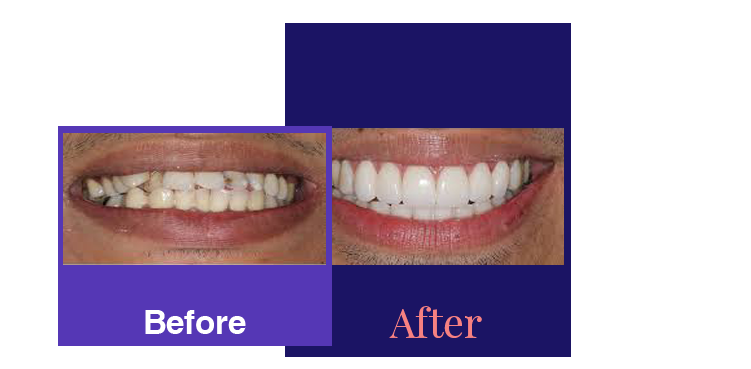


Fears related to dental implants
If you are afraid of pain or simply by the intervention itself, we have the solution for you: conscious sedation. This means that you are given a special anesthesia and an anesthetist will monitor you throughout your surgery so that you will not feel anything and be perfectly safe. At the end of the procedure you will be awakened and you will be able to go home and get rest, because there is no need for hospitalization or medical supervision. You’ll be just a little dizzy.
If you think of financial issues, we have also financial solutions for you. You will have a rigorous treatment plan prepared, so you will know all the costs before the intervention. If you feel the need for a rescheduling of payments, we can discuss this too, just let us know.
If you are afraid that the implant will be “rejected” by the body, we want you to know that no surgery is done without a set of prior blood tests, so we will know exactly what your overall health is.
The lack of integration of implants into bone is usually caused by a general disorder such as untreated diabetes, cancer, untreated periodontitis, radiotherapy, etc., or vicious habits such as smoking, alcoholism. We will ensure that your body is ready to receive the dental implant.
How can a dental implant be used?
As a replacement for one missing tooth
As a support for fixed dental bridges built on implants
As a support for mobile dentures
Thus, implants can replace one missing tooth, or serve as support for complex reconstructions, even for dentures.
How do you know if you are a dental implant candidate?
If you miss one or more teeth on the arcade, you can consider the dental implant. The surgeon can tell if you are the perfect candidate for implants or not, after carefully scanning your CT scanner. Please note that inserting an implant requires 3D imaging (CT scan) that accurately measures the bone size in the jaw area that will receive the implant. Just a panoramic X-ray is not enough to prepare a treatment plan.
It is good to know that after losing a tooth, the bone suffers resorption as time passes, so after a certain period of time it is possible that the remaining bone cannot provide enough support for the future implant.
In such cases, it is possible to need bone addition, sinus lifting, bone-splitting, etc., or even implant insertion can be dropped. So do not wait for years to decide, because the bone is diminishing and the procedure may become complicated or may even become impossible.

Why do you need a dental implant?
If you consider the insertion of a dental implant, we invite you at the clinic for a consultation with our specialists. They will recommend the following preliminary investigations for your intervention:
CT in the insertion area of the implant
Blood tests
EKG
If you suffer from other general conditions or follow a particular medication pattern, your implantologist may work interdisciplinary with your general practitioner and establish together the correct approach.

